Wednesday, July 21, 2010

The City by the Bay


I had a f.a.b.u.l.o.u.s trip to San Francisco last weekend. I flew up early afternoon Friday and stayed until Sunday late. Monday was a blur because by the time I returned home and went to bed it was practically time to get up for class. If I could have I would've cancelled class and stayed in bed for more sleep. However, this is the last week of the summer session so alas (and alack) I couldn't "play hooky". Anyway,what a f.a.b.u.l.o.u.s trip! The weather was considerably cooler which was a blessing in itself. Visited college friends who have been living in Russian Hill for the last few years since inheriting property and who had invited me a while back to come see the current exhibitions at the deYoung and MOMA. I do so enjoy San Fransisco and seeing Ella and Stefan and go when I can (not as often as I'd like as this is my first and, in all probability, only trip this year) and this trip date was planned to coincide with reservations at The French Laundry (which take, on average, a couple of months to procure). Some of the same places are always on the "to-do" list but, since my trips up north are so so infrequent, we always try to go somewhere new each time I visit. The deYoung is always on the list as is the Japanese tea garden. Didn't have time for Chinatown,Fisherman's Wharf or City Lights Bookstore this trip because but the time we got back to the city (see TFL below), went to the Japanese tea garden and had a early dinner it was time to head to the airport. The "new" experience this trip was dining at The French Laundry. Oh.My.God!!! What an over-the-moon experience TFL was - the food was almost as good as an orgasm. Then again, 'twas a culinary orgasm so... . The French Laundry was, without a doubt, the finest dining experience I have ever had in my entire life. Astronomical prices so it was fortunate that the eve was "comped" by monied parents. Just unbelievable! And because it takes a long while to truly savor a 9-course meal and there were quite a bit of "adult beverages" consumed we stayed the night in Yountville (where TFL is located). Just an overall amazing weekend. Images shown were not taken by me.


Birth of Impressionism: Masterpieces from the Musée d’Orsay at the deYoung.


Calder to Warhol:Introducing the Fisher Collection
at MOMA

The French Laundry


Japanese Tea Garden


Images Shown:
San Francisco Cable Car
deYoung Art Museum
San Francisco Museum of Modern Art
The French Laundry
Japanese Tea Garden

Tuesday, July 20, 2010

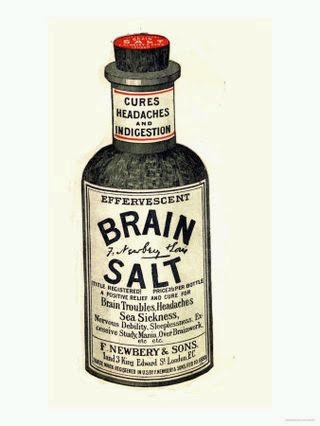
Hmmm.....


Wonder if this would help recalcitrant student brains get the message that this summer session wasn't an online course and that they can't submit the entire 6 weeks worth of assignments on the last day of class. Yes, there are three more days, counting today, of summer session and some slacker/slackerettes in class are still lobbying for turning in the entire 6 weeks of assigned work on the last day of class. Or maybe it would help me since it says it cures headaches and they're certainly giving me one with all of their whining.

Friday, July 16, 2010

Summer Session Student Sniveling


Next week is the last week of the 6-week summer session I've been teaching. Students who, for the last 5 weeks, have been slackers and not submitted ANY work (but haven't had any absences so they couldn't be dropped) are suddenly serious about the class. For the past 2 days I've been barraged with emails and in-person excuses as to why they've not submitted work and why I should let them submit an entire semester's worth of work this weekend and next week. Mind you, these are students who took spots in the class that could have been given to others that actually care about their education. With all the budget cuts that have resulted in class cuts (we had to reduce summer offerings by 50 percent and there were over 4,000 students on waitlists for the summer session) it is more than frustrating to have a student take a spot in the class and then proceed to not participate in said class. I am so glad I'm turning off the computer (and, by extension, student email reading) and flying to San Francisco in a few hours for 2 1/2 days in "the city by the bay". In any event, the art piece above reflects what my brain has been hearing.


Image Shown:
Blah, Blah, Blah, Mel Bochner, 2010, oil on velvet, 63 x 57 x 1.8 inches

Wednesday, July 14, 2010

Happy Bastille Day!


Images Shown:
Claude Monet - Rue Montorgueil, Paris
Veuve Clicquot for celebratory toasting of Bastille Day
Eiffel Tower Fireworks Celebrating Bastille Day

Tuesday, July 13, 2010

First Comprehensive U.S. Museum Survey of Dennis Hopper Opens at MOCA


The Museum of Contemporary Art, Los Angeles (MOCA), presents Dennis Hopper Double Standard, the first comprehensive survey exhibition of Dennis Hopper’s artistic career to be mounted by a North American museum, July 11 through September 26, 2010, at The Geffen Contemporary at MOCA.


Best known for his work in film, Hopper produced an oeuvre of remarkable breadth that blurs the boundaries between art, film, and popular culture. The exhibition will trace the evolution of Hopper’s artistic output and feature more than 200 works spanning his prolific 60-year career in a range of media, including an early painting from 1955; photographs, sculpture, and assemblages from the 1960s; paintings from the 1980s and ’90s; graffiti-inspired wall constructions and large-scale billboard paintings from the 2000s; his most recent sculptures; and film installations. The title of the exhibition is taken from Hopper’s iconic 1961 photograph of the two Standard Oil signs seen through an automobile windshield at the intersection of Santa Monica Boulevard, Melrose Avenue, and North Doheny Drive on historic Route 66 in Los Angeles. The image was reproduced on the invitation for Ed Ruscha’s second solo exhibition at Ferus Gallery in 1964. Dennis Hopper Double Standard is curated by Julian Schnabel, whose work has been inspired by Hopper’s fusion of art and film.


“Dennis Hopper’s work has been a springboard for the work of many artists and filmmakers of a younger generation,” comments MOCA Director Jeffrey Deitch. “His fusion of artistic media has become an inspiration for the new artistic generation who often draw on performance and film as well as painting, sculpture, and photography in the creation of their work.”


Julian Schnabel calls Hopper, “a painter without a brush,” articulating a visual statement that is “beyond language.” Schnabel speaks about how Hopper “made film into art,” and describes how he “takes the viewer on a high risk journey with him, working without a safety net.”


Hopper prefigured the union of art, life, and popular culture that characterizes much of the art of the 21st century. He was a creative connector, introducing and collaborating with artists, actors, writers, and musicians for nearly six decades. His works made in the 1960s capture the quintessential pop imagery that symbolizes Los Angeles during that time. “L.A was Pop,” Hopper recalled, talking about that period, “L.A. was the billboards. L.A. was the automobile culture. L.A. was the movie stars and L.A. was the whole idea of what ‘Pop’ was about.” Ahead of his time in bringing the art of the street into the gallery, Hopper’s work also constructs a dialogue between abstract expressionist painting and graffiti and gang signs from Los Angeles street culture.


Dennis Hopper Double Standard assembles key selections and bodies of work examining the artist’s creative development with a focus on artworks made between 1961 and present day, as many of Hopper’s earlier paintings were destroyed in his studio by the 1961 Bel Air fire. The exhibition will be organized in several sections reflecting the cyclical and serial nature of the artist’s work. The layout will bring together various groupings of work emphasizing Hopper’s interest in Duchampian appropriation of common objects and the dialogue between pop and progressive culture. It will also highlight the ways in which Hopper has utilized a range of styles—from abstraction, the ready-made, and pop art to conceptual and performance art—to further his investigation into the “return to the real.”


The first portion of the exhibition will include a comprehensive selection of sculpture and assemblages as well as photographs documenting the progressive, changing culture of the time and the pop-art scene in both Los Angeles and New York from the 1960s. The second section will feature a series of paintings from the 1980s and ’90s inspired by graffiti-covered walls and the urban Los Angeles landscape. This segment also incorporates Hopper’s set-like wall constructions. Hopper’s monumental billboard paintings from the 2000s, which borrow images from his earlier life and work, and more recent series of abstract landscape photographs will also be included in the exhibition. In the final section, a series of film installations highlighting Hopper’s career as a director and actor will be presented.


Fred Hoffman, who has a long association with Dennis Hopper, is the curatorial consultant for Dennis Hopper Double Standard. The museum thanks Tony Shafrazi and Tony Shafrazi Gallery for their dedicated collaboration in realizing the exhibition.


For nearly six decades, Dennis Hopper (b. 1936, Dodge City, Kansas; d. 2010, Los Angeles) was at the center of the Los Angeles creative community. He had a prolific career working in film, photography, as a painter, and as a sculptor. He directed numerous films including Easy Rider (1969), The Last Movie (1971), and Colors (1988), and acted in many more including Rebel Without a Cause (1955), Giant (1956), Cool Hand Luke (1967), Apocalypse Now (1979), Blue Velvet (1986), Speed (1994), and Basquiat (1996).


Hopper has been celebrated in monographic and group exhibitions around the world including the Corcoran Gallery of Art, Washington D.C.; The Walker Art Center, Minneapolis, Minnesota; the Stedelijk Museum, Amsterdam; the State Hermitage Museum, St. Petersburg; MAK Vienna: Austrian Museum of Applied Arts/Contemporary Art, Vienna; the Whitney Museum of American Art, New York; and most recently the Cinémathèque Française, Paris, and the Australian Centre for the Moving Image, Melbourne.

Friday, July 9, 2010

An Intimate Look Into the Most Controversial Band in Rock History


To coincide with the theatrical release of When You're Strange, Idea Generation Gallery has an intimate look into one of the most controversial rock bands in music history.


The Doors: When You’re Strange showcases one of the most contentious rock bands to exist. The exhibition will offer an intimate account of The Doors from their rise to fame to their breakthrough on the music scene in 1965.


The Doors’ arrival not only marked a string of hit singles but was the start of a new counterculture scene in the 1960’s.The exhibition will reveal intimate portraits of Jim Morrison and how he became one of the most charismatic lead singers with The Doors becoming one of the most controversial rock bands to exist. After Morrison’s death in 1971, The Doors disbanded, with their active career finishing shortly after his death, but their popularity persisted selling over 75 million albums worldwide.


To celebrate the success of the band, in conjunction with Morrison Hotel Gallery, Idea Generation Gallery will showcase the photography of Henry Diltz, Joel Brodsky, Bobby Klein and Ken Regan, who all documented the bands time together. Alongside their most celebrated works, When You’re Strange brings together the lesser known archives and previously unseen contact sheets of photography taken over the decade the band were together. Both Diltz and Brodsky captured The Doors at their most private moments at home and on tour and this exhibition provides one of the most comprehensive and intimate views into their exclusive world.


Although The Doors’ active career ended in 1973, their popularity persisted, selling over 75 million albums worldwide. In 1991 Oliver Stone added to this popularity by directing The Doors, a highly successful biopic of Jim Morrison’s colourful life.


Photographers Include:

Henry Diltz
A founding member of the Modern folk Quartet, Diltz captured intimate photography of bands on tour. Considered as a visual historian of the last four decades of popular music his shots convey a rare feeling of trust and intimacy with his subjects.


For Diltz, his pictures began with a $20 second – hand Japanese camera purchased on tour with the Modern Folk Quartet. When they disbanded, Diltz embarked on his photographic career with the album cover for The Lovin’ Spoonful. Despite his lack of formal training, Diltz submerged himself in the world of music.


For over 40 years his work has featured on many album covers, books, magazines and newspapers. His style has produced powerful photographic essays of Woodstock, The Doors and Jimi Hendrix. He continues an established career, generating new and vibrant photographs being a partner in, and exclusively published and represented by The Morrison Hotel Gallery.


Joel Brodsky
Responsible for shaping the iconography of the psychedelic era, capturing landmark acts including The Doors.


Despite having a keen interest in photography as a teen, he graduated to serve in the US Army. As a favour to a friend Brodsky agreed to shoot the cover of Eric Andersen’s sophomore Vanguard release “ Bout Changes and Things”, quickly emerging as the label’s go to photographer. Electra Records signed The Doors and Brodsky was assigned to shoot the photos for their forthcoming debut LP. While his group photography was outstanding including the image that became the band’s first advertising Billboard, it was his solo shots of frontman Jim Morrison that proved the most iconic. The session in which he captured “Young Lions” photos would later become the enduring cult following and mass merchandising that mushroomed around the singer in the wake of his 1971 death.


Bobby Klein
Bobby Klein entered the field of visual arts, as a teenager, in the early 1960’s when he was a co-producer of numerous live ‘dance party’ television shows being broadcast from Los Angeles. During that time he purchased his first camera and shot pictures around Los Angeles. His long time love affair with the camera began in this way. He put together a book of his photos and made the rounds of the record companies he had visited when he was a personal manager for a number of musical personalities of the day.

He became the west coast photographer for Colombia (CS) records and other smaller labels. He was the Doors and Jim Morrison’s first professionally hired photographer and went on to photograph music and film personalities including Jimi Hendrix, Janis Joplin, Dennis Hopper, classical composer Igor Stravinsky and, the then stand-up comedian, Steve Martin.


His photographs of the Doors and Morrison are still published in many books about the history of Rock and Roll.


Bobby Klein presently lives in the Echo Park neighborhood of Los Angeles where he practices as an intuitive psychotherapist and spiritual teacher. He is also working on a documentary of his photographic work through the late 60’s and 70’s.


Ken Regan
Born and raised in the Bronx, Ken Regan studied journalism at Columbia and attended New York University’s Film School. Initially forging a career photographing major sporting events, Ken went on to work as a photojournalist covering many topical issues including the riots and demonstrations in the United States surrounding the Vietnam War, and was in the Persian Gulf and Bosnia.


Changing paths once again, Ken covered many political assignments and worked exclusively with the Kennedy family, photographing everything from campaigns and conventions to annual family gatherings.


The mid 70s saw Ken touring with some of the most renowned musicians in Rock N Roll history including Bob Dylan and the Rolling Stones also covering Amnesty International and Live Aid.


By the late Eighties, Ken had over 200 magazine covers to his credit, as well as numerous awards from the Missouri School of Journalism and World Press Photo to the New York Newspaper Guild.

Wednesday, July 7, 2010

Princeton Museum Announces Gauguin Woodblock Prints Exhibition


The Princeton University Art Museum will launch its fall 2010 season with an exhibition it is originating, Gauguin's Paradise Remembered: The Noa Noa Prints (September 25, 2010—January 2, 2011), the first comprehensive look at this pivotal woodcut series.

Gauguin's Paradise Remembered posits a new way of understanding a key body of work within the artist's career, and by extension a new way of understanding this vital post-Impressionist artist. The exhibition presents 32 works that concentrate on the pivotal series of 10 revolutionary woodcuts produced by Paul Gauguin (1848—1903) in Paris during the winter and spring of 1894, following his first voyage to Tahiti, where he hoped to live simply and draw inspiration from what he saw as the island's exotic native culture. Although the artist was disappointed by the rapidly Westernizing community he encountered, his works from this period nonetheless celebrate the myth of an untainted Polynesian idyll. Gauguin had originally intended his woodcuts to be illustrations for a manuscript he had written in the form of a largely fictionalized journal entitled Noa Noa (Fragrant Scent). Based on his idealized experiences in the South Seas, the book traced his self-styled transformation from a civilized European into one deeply immersed in the ancient spiritual life of Oceania. Self-consciously primitive in style, printed and colored by hand, Gauguin's Noa Noa woodcuts crystallize important themes and compositions from his Tahitian works, enjoying a widespread notoriety in Gauguin's lifetime and surviving today as both his printmaking masterpiece and as one of the most innovative print series produced in the 19th century.

In Gauguin's time, the Noa Noa woodcuts were celebrated as a true combination of printmaking, drawing and sculpture. Gauguin's Paradise Remembered explores the full range of inventive techniques of these prints through a selection of works from a number of prestigious American museums, including the Art Institute of Chicago and the Metropolitan Museum of Art. Jointly organized by Calvin Brown, associate curator of prints and drawings at the Princeton University Art Museum, and Alastair Wright, university lecturer in the history of art at St. John's College, Oxford, the exhibition was inspired by the Art Museum's recent purchase of an early proof of L'Univers est créé (The Universe Is Created), one of the most enigmatic of the Noa Noa woodcuts. Central to the exhibition are an investigation of Gauguin's artistic process, a rare presentation of all 10 Noa Noa woodcuts, as printed and hand colored by Gauguin, and a broader contextualization of Gauguin's work that reveals how the artist's experimental printmaking became central to his unique artistic vision. Gauguin's Paradise Remembered addresses both the artist's representation of Tahiti in the woodcut medium and the impact these evocative works had on his artistic practice, to illustrate how the woodcut form offered Gauguin the ideal medium to depict a paradise whose real attraction lay in its remaining always unattainable, never quite within reach.


Images Shown:
Eve ("The Nightmare"), 1899–1900. Recto: Traced monotype transfer drawing in black printer's ink, ochre ink, and liquid solvent on cream wove paper, 64.2 x 48.9 cm.

Auti te pape (Women at the River) from the Noa Noa suite, 1894. Woodcut printed from one block in orange and black, respectively, over yellow, pink, orange, blue, and green on laminated cream Japanese paper, sheet trimmed to block: 20.3 x 35.3 cm.

Thursday, July 1, 2010

Klee at SFMOMA


From August 7, 2010, through January 16, 2011, the San Francisco Museum of Modern Art will showcase the exhibition Prints by Paul Klee (1946). Organized by John Zarobell, SFMOMA assistant curator, collections, exhibitions, and commissions, the exhibition features 21 works.

SFMOMA has had a longstanding commitment to the art of Paul Klee over its 75-year history. This exhibition re-creates a show of prints by the Swiss-born modernist held at the museum in 1946. At that time, Klee's work was little known outside of Europe; the exhibition was perceived as highly original, and the works seem no less fresh or innovative more than six decades later. The prints demonstrate how Klee, like many German Expressionist artists of the early 20th century, experimented with etching, drypoint, and lithography techniques in order to advance his exploration of pictorial symbolism.

Klee (1879–1940), born in Münchenbuchsee, just north of Bern, Switzerland's capital, grew up in a musical family and was himself a violinist. Ultimately he opted to study art and in 1900 trained with neoclassicist Franz von Stuck at the Munich Academy, where he first met painter Vasily Kandinsky. As was standard academic practice, his training included anatomy lessons and life drawing from the nude; he later spent seven months touring Italy, where he was exposed to early Christian and Byzantine art. In 1906 he married pianist Lili Stumpf and settled in Munich, then an important center for avant-garde art; their only child, Felix, was born there the following year. Klee's friendship with Kandinsky prompted him to join Der Blaue Reiter (The Blue Rider), an expressionist group pivotal to the development of abstract art. Later, at the invitation of founder Walter Gropius, Klee taught at the esteemed Bauhaus from 1920 to 1931; in 1931 he accepted a position at the Dusseldorf Academy, but was soon dismissed by the Nazis, who included 17 of his works in their infamous exhibition of "degenerate art," Entartete Kunst, in 1937. After a move to Switzerland in 1933, Klee developed the crippling collagen disease scleroderma, marked by a pathological thickening and hardening of the skin; he died from its complications in 1940.


Images Shown:

A Spirit Serves a Small Breakfast, Angel Brings the Desired, 1920; lithograph with watercolor.

Der Verliebte (Man in Love), 1923; print; color lithograph, 10 13/16 x 7 1/2 inches